


The best drone for 2027 is one that matches how you want to fly, your experience and the features you will actually use. We suggest comparing controls, camera capability, flight time, portability and costs rather than choosing on a single specification. A beginner practising gentle manoeuvres has different needs from a photographer seeking flexible framing or an enthusiast learning first-person view flying.
Choosing a quadcopter drone or another design
A quadcopter has four propellers, or rotors, and is one form of multi-rotor drone. Multi-rotors are known for manageable control and manoeuvrability, making them useful for aerial photography and flying in confined spaces. Their power consumption can, however, limit battery life. These design trade-offs matter when choosing between drone types.
Flight designs differ in how they perform. Fixed-wing drones resemble aeroplanes and typically offer greater range and endurance, but need a runway or launcher for take-off. Hybrid VTOL drones combine fixed-wing and multi-rotor characteristics, so they can hover as well as fly long distances. Single-rotor helicopter designs can carry payloads and are used for industrial and military operations.
For an enthusiast interested in hovering and photography, a multi-rotor is a useful starting point. If your goal is a longer-distance mission rather than hovering, the fixed-wing or hybrid trade-off deserves closer attention.
How to choose a drone for beginners
For a first drone, we would put steady controls and useful safety modes ahead of an impressive specification list. A straightforward camera can suit someone learning take-offs, landings and gentle manoeuvres while recording simple footage. If photography is the main goal, give more weight to the camera and framing options you want.
Racing drones are geared towards speed, while professional filming drones focus on video capability. Some racing drones also come as kits that need assembly, so consider the skills and work involved as well as the performance.
First-person view, or FPV, offers another way to fly: you see the drone camera’s view in real time, usually through goggles. For beginner FPV flying, balance room to improve against the difficulty of controlling a high-end racing or freestyle setup. Simulator practice can help you become familiar with the controls and repeat manoeuvres without risking the aircraft.
Flight systems and performance in use
A drone’s motors spin its propellers to produce thrust, while the flight controller and electronic speed controllers coordinate motor output. On a multi-rotor, the rotors provide lift and movement and enable vertical take-off and landing. The propulsion system is therefore part of the handling experience, not just a list of components.
Battery capacity, weight and operating conditions all affect how far a drone can fly. A larger battery can typically support longer flights and greater distance, but it also adds weight. A heavier drone generally needs more energy to stay airborne than a lighter one with a similar battery capacity, so compare the range factors together rather than treating battery size as the whole answer.
Controls and sensors matter alongside endurance. Compare the controller or app arrangement you will use, and check which safety modes or obstacle-avoidance features are fitted to each model. Choose the setup that fits the way you intend to fly, rather than assuming every aircraft offers the same assistance.
Comparing specifications with real-world flying
Use quoted flight time and range as starting points, then look for observations made in conditions relevant to your plans. Weight, battery capacity and operating conditions all affect performance, so a specification is more useful when considered alongside those factors.
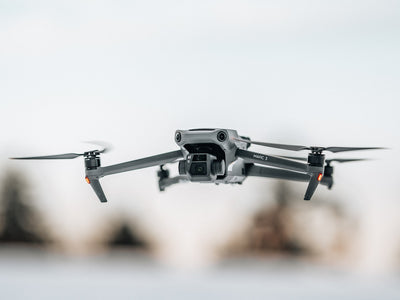
A flight review of the DJI Mavic 3 Pro reported 28 to 32 minutes of real-world flight time in good conditions and noted that the model could fly for two to four minutes less than other Mavic 3 models using the same batteries. That is a comparison of those aircraft in the review, not a flight-time estimate for other drones.
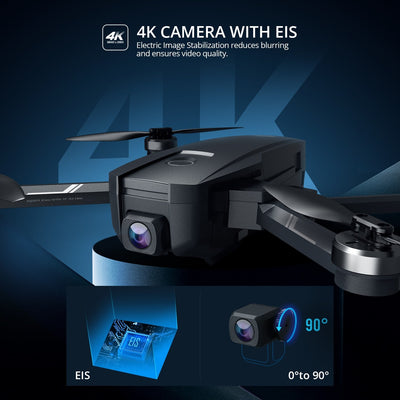
For a camera comparison, check the stated video capability against what you actually want to capture. A camera’s presence alone does not tell you whether its image quality or framing options suit your plans.
Portability, camera ambition and cost
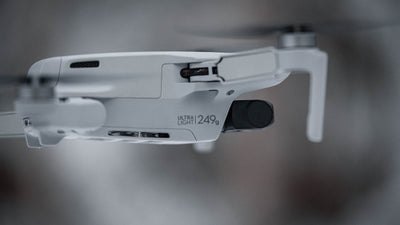
A lightweight drone can be easier to carry on a trip, while wind performance needs separate consideration for the individual model.
Camera ambition can change the balance. For casual footage, approachable controls and a simple camera may be enough. For still photography, consider sensor size, which affects image quality, especially in low light. A lower or higher price alone will not tell you which features a particular drone provides.
Advanced features can add to cost. High-resolution cameras, three-axis gimbal stabilisation, obstacle-avoidance sensors, longer flight times and extended control ranges are among the features that affect drone prices. Decide which of them supports your own flying before paying for a more elaborate specification.
Budgeting for accessories and maintenance
Budget for an FPV system as a whole, not just the aircraft. Check what comes in the package and what you need separately, especially for an FPV setup, which may need a radio controller, goggles, batteries, a charger and basic replacement parts.
Compatible spares also deserve a place in your plan. If the drone has replaceable batteries, check which battery model it uses. Propellers can be damaged in a crash, so identify the correct size for replacements. A maintenance kit can also include tools suited to the aircraft.
Consider support and compatible accessories when comparing alternatives, as well as the initial purchase. For FPV, consistent simulator practice can reduce avoidable crashes and potentially save money on repairs.
Common drone choice mistakes
For a first FPV drone, do not focus on price, speed, camera or appearance without considering how difficult it will be to learn, repair and maintain. Very cheap toy-like FPV drones can offer basic controls, weaker performance and fewer customisation options, while high-end racing or freestyle equipment can be harder for beginners to control.
A second-hand first quadcopter may appear cheaper. If you are new to FPV, existing problems may be hard to identify or fix. Consider your present skills as well as how you hope to develop them before committing to a setup.
What to check before committing to a drone
A shortlist becomes more useful when you compare each option against the same intended flight. Our drone-buying checks bring together the aircraft, its controls and the conditions in which you plan to use it.
- Define the goal. Decide whether your priority is learning control, taking straightforward footage, pursuing photography or developing FPV skills.
- Compare the flying system. Check the controls, camera, safety modes, quoted endurance and the viewing setup you will use.
- Assess your intended locations. Consider the take-off area, surroundings, weather and the aircraft’s stated limitations. Check the location before travelling and again before flying.
- Plan for ownership. For an FPV bundle, check what is included, as well as the correct battery model and propeller size, and what any insurance policy covers.
Write down your essential features, then compare your shortlisted drones against them. The right choice is the one that supports the flying you intend to do without adding features you have no clear reason to use.
Leave a comment