


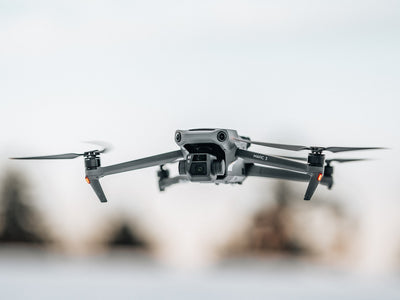
DJI has established itself as the preeminent leader in the global drone market, commanding a staggering share of over 70% in the consumer segment and nearly 70% across the overall drone sector. This dominance is attributed to several key factors, including technological innovation, competitive pricing, and strategic market positioning.
Founded in 2006, DJI began as a small startup focused on making drones accessible to hobbyists and professionals alike. The introduction of the Phantom drone in 2013 marked a significant turning point, as it was one of the first consumer drones designed for ease of use. This focus on user experience has allowed DJI to set industry benchmarks for performance and reliability, making it a household name in the drone community according to DJI.
DJI's ability to leverage mass production and supply chain integration has enabled it to offer competitively priced products globally. The company invests heavily in research and development, with approximately 25% of its workforce dedicated to product innovation, ensuring that it remains at the forefront of technological advancements in the drone industry as noted by DJI.
What Challenges Does DJI Face?
Despite its market dominance, DJI is not without challenges. Recent regulatory changes in the United States pose significant hurdles for the company. In December 2025, the U.S. government announced a ban on new foreign-manufactured unmanned aerial systems, which includes DJI products. This regulation could potentially limit DJI's market access in one of its largest consumer bases as reported by CKGSB Knowledge.
The geopolitical landscape has raised security concerns regarding the use of Chinese-made drones in sensitive applications. The U.S. has been particularly vocal about its reliance on PRC drones, with reports indicating that from 2010 to 2022, approximately 85% of drones purchased by state agencies were made in China according to SCSP. This dependency has led to calls for reduced reliance on foreign technology, which could impact DJI's future growth.
Global Market and Growth
The global drone market is projected to grow significantly, with estimates suggesting it could reach around USD 95.4 billion by 2034, growing at a CAGR of 10.1% from 2025 to 2034 according to Market.us. This growth is driven by increasing adoption across sectors such as agriculture, logistics, and public safety, which presents opportunities for both established players and new entrants.
In terms of market share, North America is expected to dominate, holding a 48.4% share in 2025, while the Asia-Pacific region, led by China, is the fastest-growing market as noted by IMARC Group. This dynamic indicates that while DJI currently leads, the competitive landscape may evolve as new technologies and regulatory frameworks emerge.
Conclusion
DJI's dominance in the drone market is a result of its innovative approach, strategic pricing, and significant investment in research and development. However, the company faces challenges from regulatory changes and emerging competitors. As the global drone market continues to expand, it will be crucial for DJI to navigate these challenges while maintaining its leadership position.
Leave a comment