


Yes, a drone flight over a UK motorway can be allowed, but the answer depends on the drone, the people below, airspace restrictions and whether the flight can be made safely. The Civil Aviation Authority’s Drone Code sets out the basic rules for the Over People (A1) and Far from People (A3) sub-categories, including exceptions for smaller and certain class-marked drones. A flight outside the Code requires the correct authorisation before you fly.
How people in vehicles affect motorway overflight
The normal 50m separation rule includes people in cars and lorries. Where that rule applies, you must keep at least 50m horizontally from people and must not fly over them within that zone, even if your drone is higher than 50m. The CAA describes the no-fly zone as extending upwards to the legal height limit.
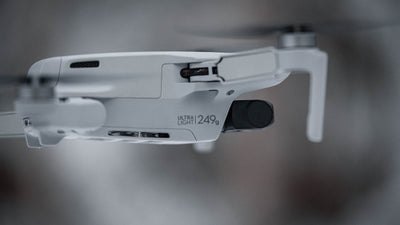
There is an exception for a drone below 250g or one in the UK0, UK1 or C0 class: you can fly closer than 50m to uninvolved people and over them. The same allowance applies to C1 class drones from 1 January 2026 until 31 December 2027. Even with those drones, you must not fly over crowds under the Code, and you must never put people in danger.
For this rule, a crowd means a group of people who cannot move away quickly because of the number of other people around them. The 50m minimum-distance rule is also different for people involved in your flying activity: you can fly closer to them, but you must never put anyone in danger.
What changes with height and nearby areas?
The Code says to fly below 120m (400ft), and the drone must never be more than 120m from the closest point of the earth’s surface. Where the ground rises or falls, you may need to adjust your flight path to stay within that limit. The CAA also advises increasing separation where needed for safety, including in poor weather or when flying at high speed.
Nearby residential, recreational, commercial or industrial areas also affect the decision. The Code normally requires at least 150m separation from those areas, but permits drones below 250g or in the UK0, UK1 or C0 class to fly in them. C1 class drones have the same area allowance from 1 January 2026 until 31 December 2027, and flights must always be safe.
Which restrictions can prevent a motorway flight?
Check airspace restrictions and hazards before flying. For example, you must not fly in an airport, airfield or spaceport Flight Restriction Zone without permission from the relevant airport, airfield or spaceport. The CAA points pilots to the NATS map of airspace restrictions, while noting that some restrictions, particularly those created at short notice, are not shown there. You must check a correct and up-to-date source before flying, as information in a drone’s inbuilt software may not always be up to date.
Local byelaws may restrict when you can fly and where you can fly from, so check signs for information and contact details. You must not hamper emergency services responding to an incident, and if an incident happens at or near your flight, you must safely and immediately stop flying unless the emergency services give you permission to continue. The CAA includes road traffic accidents among its examples of emergency incidents.
When is additional authorisation needed?
If your planned flight falls outside the Code, obtain the correct authorisation first. The CAA gives flying at different heights or distances, closer to a listed area, or over crowds as examples that need its authorisation. In some cases, membership of a recognised club or association may provide additional authorisation, subject to its conditions, so check with the club or association before flying.
Before choosing a route over a motorway, check your drone’s weight or class, the people and areas around the flight, and the restrictions that apply at the location. If the planned flight falls outside the Code, arrange the appropriate authorisation before taking off.
Leave a comment