


Your neighbour can fly a drone weighing under 250g in most UK locations, including towns and cities, but not over crowds, according to the Civil Aviation Authority’s guidance on drone concerns. That is not an unrestricted permission: the same guidance requires drone users to respect your privacy and not cause a nuisance.
The useful distinction is between a flight passing overhead and conduct that raises a specific safety or privacy concern. This guide explains basic UK Open category flying, particularly the A1 and A3 sub-categories, rather than advanced operations under individual authorisations.
What is a drone?
A drone is an aircraft without an onboard pilot. The Government’s explanation of drone terminology describes terms including Remotely Piloted Air System (RPAS) and Unmanned Air System (UAS). Familiar examples include quadcopters, hexacopters and octocopters.
Drones are not used solely for photography or recreation. The CAA identifies building and railway inspections among their working applications. A drone near a house is therefore not, by itself, evidence that someone is filming its occupants.
When can a neighbour fly over private property?
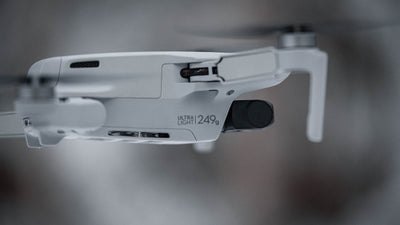
The aircraft’s weight, class and operating category matter. For basic Open category flying, the CAA’s location rules allow drones below 250g, or UK0, UK1 or C0 class, in residential areas and closer than 50m to uninvolved people, including overhead. C1 aircraft have these allowances from 1 January 2026 until 31 December 2027. Pilots must never endanger people, and these allowances do not permit flying over crowds.
By contrast, the CAA’s A3 requirements prohibit flying over uninvolved people or within 50m of them. A3 flights must also stay at least 150m from residential, recreational, commercial and industrial areas. An individual building at least 50m from other buildings is not treated as such an area, but the aircraft must remain at least 50m from it. These restrictions make A3 unsuitable for flying over a housing estate.
Permission to stand on land is a separate issue. If the person flying is standing on private property, they must have the property owner’s permission to be there, under the CAA’s private-property guidance. That requirement concerns the pilot’s location; it does not establish a requirement to obtain every householder’s consent for overflight.
For flights within the basic Drone Code, the aircraft must never be more than 120m from the closest point of the earth’s surface. Airport Flight Restriction Zones require permission from the airport, airfield or spaceport, and other restrictions also need checking, as explained in the CAA’s height and airspace guidance.
What identification does a drone user need?
Small size does not automatically remove identification requirements. The CAA distinguishes two IDs: a Flyer ID demonstrates passing the basic competence test, while an Operator ID identifies the person responsible for managing the aircraft.
- Flyer ID: anyone flying a drone or model aircraft outdoors in the UK weighing 100g or above must obtain one by passing the official theory test, under the CAA’s Flyer ID requirements.
- Operator ID: the owner or responsible person must obtain one for an aircraft weighing 250g or above, or weighing 100g or above with a camera. It must be labelled on the aircraft, and the person obtaining it must be at least 18, under the CAA’s operator requirements.
- Below 100g: neither ID is required, although applicable flying rules still apply, according to the CAA’s weight-based exemptions.
Can you stop a drone flying over your house?
The CAA’s guidance for concerned residents does not establish a blanket homeowner right to prohibit overflight or disable an aircraft. It does require drone users to respect privacy, avoid nuisance and comply with the same privacy requirements as other camera users. An allowance to fly in a residential area does not remove those duties.
Start with a calm conversation, if you feel comfortable doing so. Ask what the flight is for and explain the particular concern, such as repeated hovering near a window. Request a different route or flight time. Keep a factual record of dates, times and what you observed if the problem continues. Avoid trying to bring the aircraft down yourself; focus on resolving or reporting the conduct.
For the illegal flying situations listed by the CAA’s police-reporting guidance, including unauthorised flight above 120m, over large crowds or very close to airports, call 101. Call 999 where there is immediate danger to life or a threat of violence.
The practical takeaway: identify the behaviour causing concern rather than treating every overhead flight as the same problem. Begin with a specific request to your neighbour, and use the appropriate reporting route when the circumstances warrant it.
Leave a comment